- criminalization of social movements & the anti-terrorism crusade

- Thursday, November 5th 2009
6:30 pm Pavillon J-A-DeSève (DS)
UQAM, Rm DS-1580
320 Sainte-Catherine Street E.
graphic obey


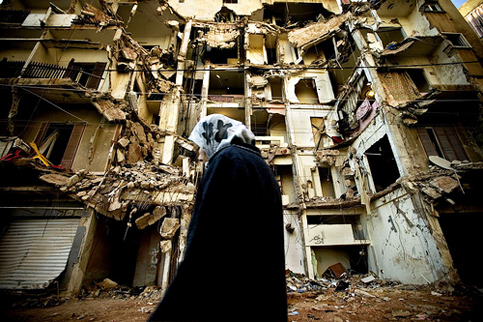
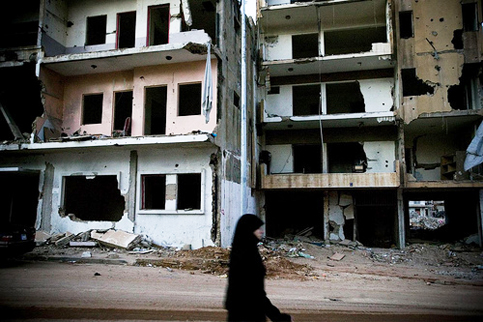
Photo: Zoriah (c) Buildings destroyed by Israeli bombings in south Beirut, 2006.
BEIRUT — Israeli director Samuel Maoz’s “Lebanon” may have won the Golden Lion at the Venice film festival but it has been given a hostile reception by critics and bloggers in the country it is named after.
“This film shows the Israeli point of view,” wrote the Venice correspondent of the Lebanese daily An-Nahar, which is aligned with the US-backed parliamentary majority.
Beirut Diaries is a documentary film by celebrated filmmaker Mai Masri.


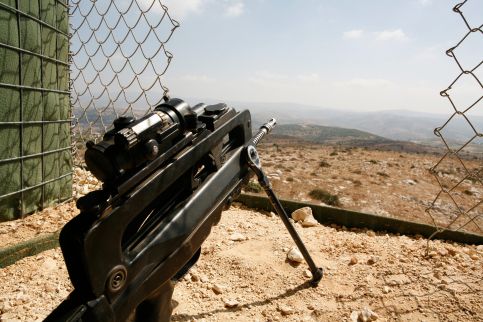
BEIRUT: The Israeli Army stepped up its presence along the border with Lebanon deploying armored tanks and setting up fortifications as it intensified airspace violations in the area, Lebanon’s state-run National News Agency reported Thursday. In “unusual military activity,” the Israeli Army deployed Merkava tanks and soldier carriers, among other armored vehicles, along the barb-wired fence separating Shebaa Farms from liberated Lebanese territories, the NNA said.
Israeli tanks were also amassing along a 5-kilometer area, stretching from Tallat Sobaih army post to Jabal al-Sheikh observatory. Sporadic gunfire was also heard throughout the day, the NNA report said.

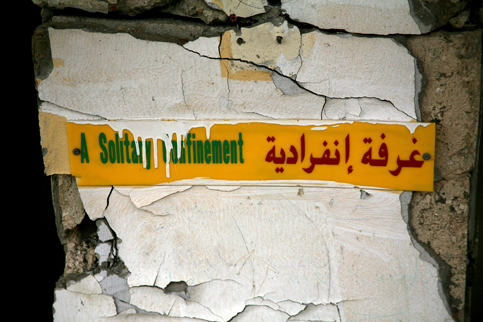
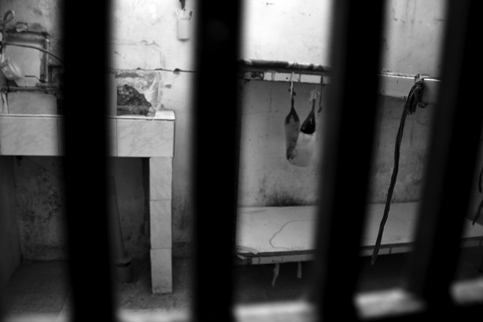
A striking symbol for the twenty-two year Israeli military occupation in southern Lebanon is the Khiam detention center. Hundreds of Lebanese and Palestinian political prisoners were detained for years at Khiam, living in squalor conditions, at times in solitary confinement and all without trial.
Multiple accounts from former prisoners at Khiam and reports issued by human rights organizations such as Amnesty International illustrate that torture was widely practiced against prisoners at Khiam. Israel’s proxy army in Southern Lebanon, the South Lebanon Army (SLA), maintained Khiam as a detention and interrogation center from 1985 until 2000 when the Israeli military was forced from southern Lebanon, leading to the collapse of the SLA.
lecture from Soha Bechara, Lebanese author and former political prisoner.

An interview with Ali Mallah of the Canadian Arab Federation.

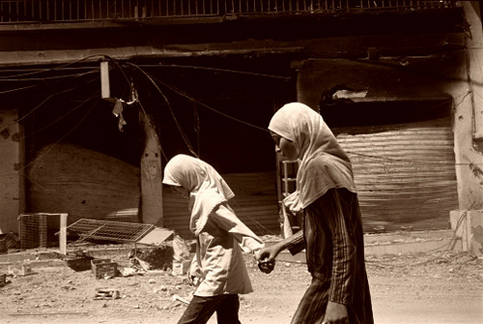
Photo: Walking in south Lebanon 2006. Interview by Stefan Christoff for Tadamon!
In recent weeks, major media outlets in Canada have featured numerous news reports on Hezbollah, outlining that the armed Lebanese political party is planning military operations in North America. Media reports have been based on anonymous intelligence sources in the U.S. and Canada.
Major media coverage in Canada was ignited by a T.V. report from the U.S.-based ABC news network claiming that Hezbollah was planning operations in Canada in response to the assassination of Hezbollah’s military commander, Imad Mughniyeh, in Syria this past winter.
Daily Star. Thursday, June 19, 2008

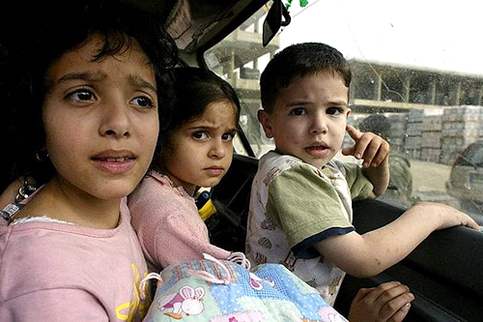
Photo: Lebanese children flee Israel’s bombing of south Lebanon in 2006.
The Lebanese government on Wednesday rejected Israel’s call for direct peace negotiations.
“Lebanon’s position is clear to all and there is no place for bilateral negotiations between Lebanon and Israel,” Premier Fouad Siniora’s media office said in a statement late Wednesday. The statement stressed that Lebanese territories occupied by the Jewish state are subject to “UN resolutions that do not require any negotiations.”
Photo Essay from Farah Kobaissy in Beirut.

Graffiti for Future Movement, founded by the assassinated Prime Minister Rafik Hariri.
In May 2008 the streets in Beirut and throughout Lebanon witnessed military clashes between armed forces backing the Lebanese opposition lead by Hezbollah and the former Lebanese government supported by Saudi Arabia and the U.S. In May the walls on the streets of Beirut expressed the level of political split of Lebanon.
Street level graffiti is now common throughout Lebanon’s capital as rival political forces take their political struggle to the city walls in Beirut. This photo essay from Farah Kobaissy documents the writing on Beirut’s walls, featuring images captured at street level within recent weeks.
Broadcasts from Beirut VI: Nada Bakri reporter with the New York Times.

A Tadamon! interview project aiming to highlight progressive voices from the ground in Lebanon on the ongoing conflict, voices independent from major political parties…
An interview with Nada Bakri, correspondent for the New York Times in Lebanon, who comments on the recent political deal reached in Doha, Qatar resulting in an official end to the recent political crisis in Lebanon. As Lebanese leaders have agreed on a power sharing agreement, people on the streets in Beirut remain skeptical that the recent agreement will result in long term stability as it reinforces the sectarian nature of Lebanese politics.