Tous les posts dans la catégorie 'Médias indépendants'

Israeli Soldiers Continue Targeting Palestinian Photographers in West Bank

14 mai 2010 | Posté dans Palestine, Médias indépendants
    Wafa Palestine News Agency, May 2010.

tadamonwallcameras

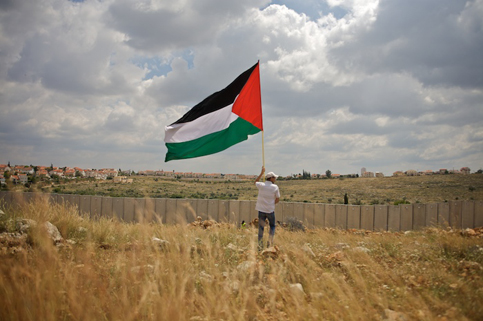
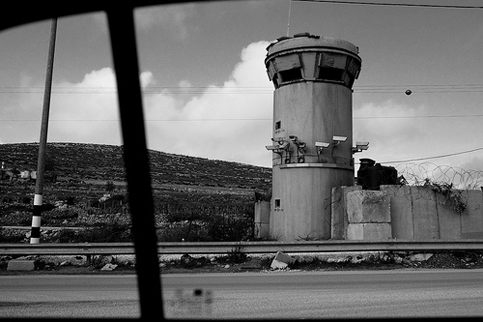
Photo: Israeli military cameras line the apartheid wall in Palestine.

Palestinian press photographers have always been targeted by the Israeli forces and at least three have been arrested and two others have been physically attacked by Israeli soldiers in the West Bank since the start of April. “These incidents must stop,” Reporters without Borders said. “The Israeli army must investigate them and punish the soldiers responsible.”

In the latest incident, an Israeli soldier fired a tear-gas grenade at photographer Muammar Jamil Awad, while he was covering the weekly protest in Beit Jala (a village 10 km south of Jerusalem) against the Israeli separation wall. He was taken directly to Jerusalem’s Sheari Tzedek hospital for treatment to a head injury.

(Lire la suite…)

Adbusters: The Israeli Brand

    Adbusters by Craig Smith, October 2009.

tadamonrebranding

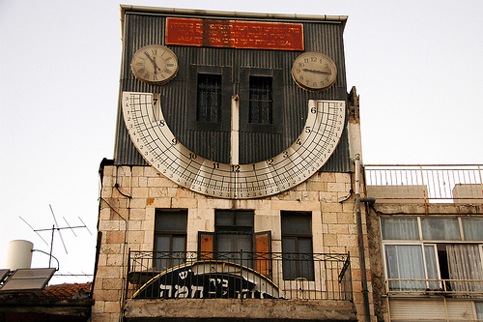
    Photo: Masser Faces within buildings in Palestine / Israel.

The public relations (PR) industry has made exceptional use of the communications revolution. But for all the globalizing effects of multinational campaigns, many brands seem inextricably tied to their home country. Injecting products into foreign markets has, to a certain extent, acted as a driving force in the way nation-states are perceived internationally.

Coke, Marlboro and Starbucks are inseparable from their provenance, and Brand America is intimately tied to its products. But consumerism alone doesn’t tell the story of how America is perceived in the world; military adventurism and moral exceptionalism undermine the feel-good aspects of consuming Americana. A nation’s brand is inextricably tied to its actions in the world.

(Lire la suite…)

Radio Tadamon! Arab Songs of Hope

19 août 2008 | Posté dans Culture, Lebanon, Palestine, Syria, Médias indépendants, Politique

    World Skip the Beat, CKUT Radio. Monday July, 2008.

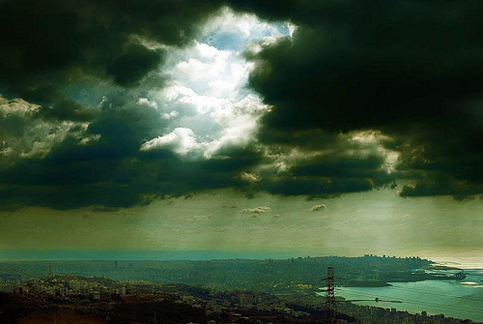
tadamonbeirutskybeautiful.jpg

Photo: Beirut by Piax. Tadamon! special edition: entire program is on-line for download.

A special edition produced by Mostafa Henaway, featuring music that spans different eras and moments in Middle East history, music composed and performed during the moments of social and political transformation. Music from the Middle East that either directly or indirectly is a reflection of these critical historical moments, from Egypt with music from the 1950’s and 1960’s that is a celebration of a new era, independent of colonialism, or more contemporary songs that present a critique dictatorship and tyranny in Egypt in the 1970’s song by Sheikh Imam.

Music from Lebanon, compositions and artists that emerged in the context of over twenty years of Israeli occupation and fifteen-years of civil-war in the country. Music from Lebanon that reflects a will of people to not be divided by sectarian politics, expressed by artists such as Ziad Rahbani in the famous song Ana Mesh Kafer, a song which asks how people of different religious faiths can condemn each other.

(Lire la suite…)

Family Politics and the New Gaza Crisis

16 août 2008 | Posté dans Civil-war, Palestine, Médias indépendants, Autre, Politique

    Palestine Chronicle. by Ramzy Baroud, August 2008.

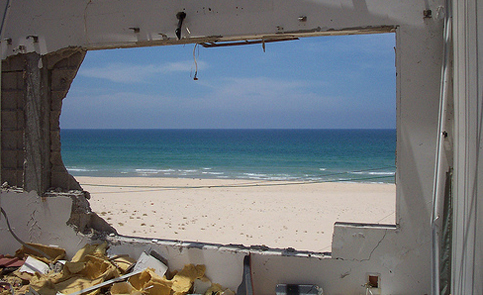
tadamongazabeach.jpg

    Photo: Svala Jonsdottir. Mediterranean Sea from the Gaza Strip.

Yet more haunting images of blindfolded, stripped down Palestinian men being contemptuously dragged by soldiers in uniform from one place to another. Yet more footage of bloodied men lying on hospital beds describing their ordeals to television reporters who have heard this story all too often. Yet more news of Palestinian infighting, tit-for-tat arrests, obscene language and embarrassing behaviour from those who have elected themselves — or were elected — to represent the Palestinian people.

Once again, the important story that ought to matter the most — that of a continually imposing and violent Israeli occupation — is lost in favour of Palestinian-infused distractions, deliberate or not.

(Lire la suite…)

Bil’in a annoncé aujourd’hui qu’il a entamé une action en justice contre deux entreprises canadiennes

    Communiqué de Presse.

tadamonnilinphoto.jpg

    Photo: Nilin Cisjordanie.

Bil’in, Cisjordanie: Le village de Bil’in, situé en Cisjordanie, dans les territoires occupés palestiniens, a annoncé aujourd’hui qu’il a entamé une action en justice contre deux entreprises canadiennes pour crimes de guerre. L’action a été introduite devant la Cour supérieure du Québec, qui siège à Montréal (Canada). Vous trouverez ci-joint copie intégrale de la plainte.

Les représentants de Bil’in allèguent que Green Park International Inc. et Green Mount International Inc., deux sociétés immatriculées dans la province du Québec agissant à titre d’agents pour l’État d’Israël, ont entrepris la construction illégale de résidences et autres bâtiments sur des terres sous juridiction municipale du village et procèdent à la mise en marché et à la vente de logements en copropriété à la population civile israélienne. En outre, les représentants de Bil’in prétendent dans leur plainte que ses terres ainsi que les intimés sont soumis aux règlements et obligations du droit international étant donné que la Cisjordanie est un territoire qui a été occupé à la suite d’un acte de guerre datant de 1967.

(Lire la suite…)

Photo Essay: Occupied Palestine

    Photo Essay from Scott Weinstein from Palestine.

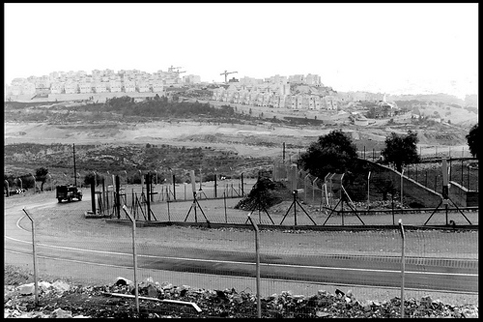
tadamonscott0.jpg

Israel’s apartheid wall and Israeli colony Beth-Hal Homar, West Bank, Palestine

Photos from Montreal photographer and community worker Scott Weinstein, who has traveled to Palestine to work with the Palestinian Red Crescent Society as a registered nurse. This photo essay documents the contemporary realities of Israeli colonialism and occupation in the West Bank, specifically focusing on the realities of settler violence against Palestinian civilians in the West Bank, specifically in the Palestinian city of Hebron. As documented by numerous Israeli human rights organizations, such as B’Tselem, Israeli settlers have beaten Palestinian civilians and forced many Palestinians to leave the historic city center in Hebron, traditionally an important and vibrant Palestinian market in the West Bank.

(Lire la suite…)

Stone by stone, rail by rail

4 juillet 2008 | Posté dans Canada, Culture, Environnement, Médias indépendants, Politique

    Briarpatch Magazine. June/July 2008 by Jonah Gindin.

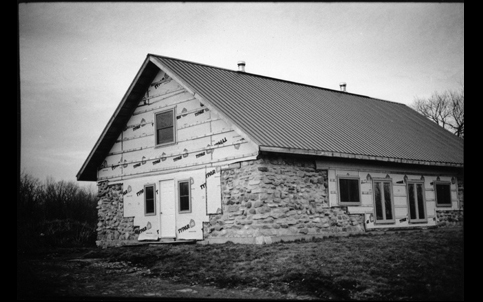
tadamonlonghousegood.jpg

Photo: Tyendinaga’s new longhouse on Ridge Road, Tyendinaga Mohawk Territory.

On June 29, 2007, Mohawks from Tyendinaga Mohawk Territory near Belleville, Ontario, erected blockades on the Canadian National rail line, local Highway 2, and Highway 401-the busiest thoroughfare in the country. This marked the second time in six months that the community blocked the rails in defence of their land. In the days before June 29, which had been declared a National Day of Action by the Assembly of First Nations, Mohawk spokesperson Shawn Brant explained to the CBC why the community could no longer wait on distant negotiations. “We bury our children in this country every day,” he said. “We have to force them to drink polluted water. We’re sick and tired of it. It’s going to end-June 29 is going to mark the time when First Nations people are going to be in a different relationship with the rest of the country.”

Native communities in Canada — a “Fourth World” of nations without states — continue to live a colonial legacy that traces a trajectory from the violent European settlement that began 400 years ago, through residential schools, to the colonial present of state surveillance, invasion of traditional lands, poverty, substance abuse, and some of the highest youth suicide rates in the world. According to Health Canada, Native youth are five to seven times more likely to commit suicide than non-Native youth. Canada’s Aboriginal population, particularly its youth, has the highest suicide rate of any culturally identifiable population in the world. Yet some Native communities have largely avoided the tragedy of youth suicide. What sets these communities apart? Evidence is mounting that successful resistance to colonialism may be the antidote.

(Lire la suite…)

Dubai: Intrigue and Injustice

    An interview with author Mike Davis.

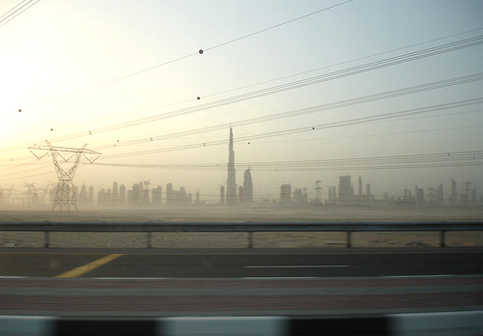
tadamondubai.jpg

    Photo: Dubai skyline. Interview by Stefan Christoff for Tadamon!

Dubai is famed internationally for lifestyles and modern monuments etched by extreme wealth, a city state in the United Arab Emirates (UAE) that has become an unlikely hub for international finance. In a region bombarded by the chaos of the U.S.-driven ‘war on terror’, Dubai a small city state located on the edge of Iran and Iraq has become a city of glamor and glitz, a striking paradox that has enchanted many around the world.

Dubai’s shining exterior is quickly becoming world famous, including a series of three-hundred constructed islands mapping out the shape of world, an indoor ski mountain in the boiling temperatures of the Persian Gulf and the soon to be completed Burj Dubai, now the tallest man made structure in the world.

(Lire la suite…)

Lebanon: Call for Agricultural Revival

Broadcasts from Beirut VII: Rami Zurayk professor, activist in Beirut: Land and People.

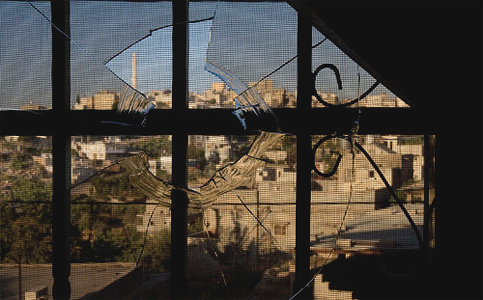
tadamonglasssouthlebanon.jpg

    Photo: Shattered glass in south Lebanon.

A Tadamon! interview project aiming to highlight progressive voices from the ground in Lebanon on the ongoing conflict, voices independent from major political parties…

May 2008 saw political turmoil in Lebanon reach its most violent peak since the end of the official end to the Lebanese civil-war in 1990. A negotiated political treaty has brought temporary peace however fails to address the poverty at the core of this tension.

This interview with professor Rami Zurayk in Beirut presents a critique of the recent Doha agreement. Critics argue that the Doha agreement is a testament to how mainstream Lebanese political leaders continue to neglect the ongoing economic crisis, compounded by Israel’s military attack in 2006. Lebanon’s agricultural areas in the south were particularly devastated, leading to major internal displacement following Israel’s attack, as farm lands remain strewn by thousands of cluster bombs dropped by the Israeli military.

(Lire la suite…)

Photo Essay: Beirut Streets. May 2008

    Photo essay from Carole Kerbage.

carole5.jpg

Beirut May 10th 2008: Barbour district Beirut witnessed harsh armed battles.

As Lebanon’s political crisis moves to a temporary negotiated solution, tensions remain high after intense street level clashes in recent weeks between pro-government forces and the Hezbollah-backed opposition. Street barricades struck across Lebanon’s capital city have now been removed, as Lebanese political leaders return to Beirut after arriving at an agreement in Doha, Qatar.

This photo essay documents recent events in Beirut’s, featuring images captured at street level within recent weeks. Lebanon’s current political struggle extends back to an intense national political history, in a nation still recovering from a 2006 Israeli bombardment that left over 1000 Lebanese civilians dead and major elements to the countries national infrastructure destroyed. Lebanese photographer Carole Kerbage has documented Beirut’s streets in the past week and now features photographs from Beirut on Tadamon!

(Lire la suite…)

Événements à venir

Recherche

Bulletin par catégorie

Archives